
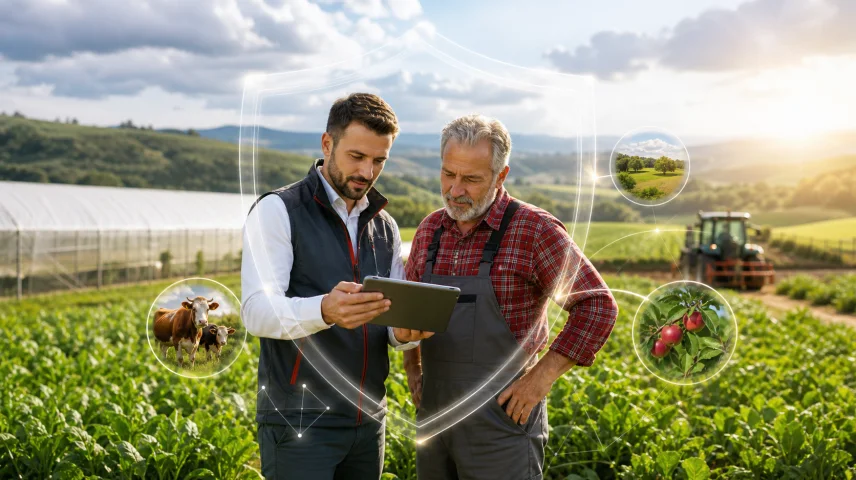
What Is TARSIM Agricultural Insurance?
TARSIM Agricultural Insurance refers to state supported insurance solutions that help producers manage agricultural risks such as natural disasters, weather events, disease, accidents, animal loss, crop loss and income loss. Agricultural production can take place in open fields, orchards, greenhouses, barns, poultry facilities, apiaries, aquaculture sites or other rural operations. Each production model has its own exposure. A single unexpected event can affect harvest plans, care costs, loan payments, supplier relations and household income.
The purpose of agricultural insurance is not only to receive compensation after damage occurs. A well selected policy helps the producer plan more clearly, manage input costs with more confidence and maintain a stronger position in credit or supply processes. The TARSIM structure works more effectively when crop, land, animal, facility or activity information matches official registration records. Before arranging a policy, producers should therefore make sure that their records are accurate, updated and consistent with actual production.
Which Production Areas Can Be Covered?
TARSIM Agricultural Insurance can be evaluated under different product groups for crop production, orchards, greenhouses, cattle and sheep, poultry, beekeeping, aquaculture and agricultural income protection needs. The risk profile is not the same for every production type. In open field production, hail, frost, storm, flood, fire or drought may be central. In livestock, disease, accident, compulsory slaughter or death risk may become more important.
For greenhouses, storm, hail, flood, fire, impact damage or structural issues may affect the facility and the crop. In beekeeping, hive transport, storm, fire, flood and wild animal damage may become relevant. In aquaculture operations, disease, pollution, storm, accidents and flood related events can disturb production balance. For this reason, agricultural insurance should be selected according to the real risk map of the production branch.
How Is Coverage Determined?
Coverage under TARSIM depends on the insured product or asset, registration status, policy conditions, risk inspection and the relevant insurance package. For crops, product type, planted area, yield data, harvest timing, parcel information and selected additional coverage can be reviewed. For animal life insurance, animal type, enterprise records, health status and acceptance criteria may be important. For greenhouses, structural features, covering materials, technical details and risk condition may be examined.
The most important point for the producer is to understand which risks are covered and which situations may remain outside the policy. Hail coverage is not the same as frost coverage. Flood risk is not the same as drought risk. Animal disease protection is not evaluated in the same way as accident coverage. Kaskocu simplifies these differences during the quote process and helps producers look at real protection value instead of focusing only on premium.
Why Does State Premium Support Matter?
Because TARSIM Agricultural Insurance is offered within a state supported framework, it may provide a cost advantage for producers. Premium support is an important factor that makes agricultural insurance more accessible. However, support conditions can change according to product group, coverage type, risk region and official rules. For that reason, current terms should be reviewed during the quote process. The producer should also check whether the policy actually matches the need, not only the support amount.
This supported structure is important for continuity in agricultural production. Producers cannot control many weather conditions, natural disasters or disease related risks. Still, seed, fertilizer, feed, labor, care, irrigation, energy and equipment costs continue. A correctly selected agricultural insurance policy can help prevent an unexpected loss from disrupting the entire production plan.
What Should Be Checked Before Application?
Before the policy is issued, the producer’s information in the relevant registration systems should be correct. If land, crop, parcel, animal, hive, greenhouse or facility data is inaccurate, both the quote and the claim process may be affected. Application timing also matters. Some coverage types must be arranged before certain risks occur. A policy purchased after damage has already happened cannot protect a past event.
During application, the producer may need to provide product type, planting information, area size, enterprise records, animal details, greenhouse technical features, hive identifiers, facility records or income protection related documents. Sharing this information completely helps prepare the quote correctly and align the policy with real production conditions. Kaskocu explains the required document steps clearly so producers can complete the process with less uncertainty.
How Does the Claim Process Work?
In agricultural insurance, timely claim notification is very important. Hail, frost, flood, storm, fire, animal death, greenhouse damage, hive damage or aquaculture loss may require different documents and inspection steps depending on the event. Expert assessment, official records, field inspection, photos, veterinary documents or enterprise records may become part of the process.
During claim evaluation, the insurer reviews coverage, limits, deductibles, waiting periods, notification requirements and exclusions together. In some cases, notifying the event before making changes to the crop, animal or facility can be critical. Kaskocu helps customers understand which step should be taken and when, reducing confusion and supporting a more organized process.
What Affects the Price?
The premium can vary according to the insured product or asset, regional risks, selected coverage, insured value, additional protections, deductibles, risk inspection results and state support conditions. The same product can have different risk levels in different regions. In animal insurance, enterprise conditions, health information and registration status may affect the quote. Therefore, a reliable price cannot be determined without reviewing producer information.
When comparing offers, the producer should look beyond the lowest premium and examine coverage value at the time of loss. A broader policy may be more valuable if it responds to the risks the producer is more likely to face. Kaskocu evaluates TARSIM Agricultural Insurance offers by considering coverage, price, support, deductibles and application conditions together.
Why Get a Quote with Kaskocu?
Agricultural insurance includes many technical details. Product type, registration system, coverage start, risk inspection, claim notice and expert assessment should be understood correctly. Otherwise, the policy may not provide the expected protection. Kaskocu listens to the producer’s activity, identifies the most relevant risks and explains offers in clear language. This helps the producer make a decision based on real protection needs rather than price alone.
TARSIM Agricultural Insurance is an important risk management tool for anyone whose labor depends on soil, livestock, greenhouse production, beekeeping or aquaculture. The right policy helps the producer avoid being left alone after unexpected weather events, disease, accidents or yield loss. A review with Kaskocu supports the protection of production value and helps agricultural activity continue with stronger planning.